
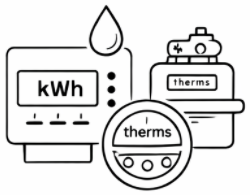
 Usage & Measurement Terms
Kilowatt-Hour (kWh)
What it is: A unit of electricity usage.
Why it exists: Electricity is billed based on energy used over time.
Control level: High
How it may appear on a bill:
“Electric Usage: 1,050 kWh”
Helpful tip:
Tracking monthly kWh is the fastest way to understand electric bill changes. More kWh almost always means a higher bill.
Therm
What it is: A unit that measures natural gas heat energy.
Why it exists: Gas is billed by energy delivered, not just volume.
Control level: High
How it may appear on a bill:
“Gas Usage: 92 therms”
Helpful tip:
Winter heating is usually the largest driver of therm usage. Small thermostat changes can significantly reduce therms.
Cubic Foot (CCF / Mcf)
What it is: A volume measurement of natural gas.
Why it exists: Gas meters measure volume before converting to therms.
Control level: None
How it may appear on a bill:
“Metered Gas: 75 CCF × Heat Factor”
Helpful tip:
Do not focus on CCF alone—final billing is based on therms after conversion.
Gallons
What it is: A unit of water usage.
Why it exists: Water utilities bill by volume delivered.
Control level: High
How it may appear on a bill:
“Water Consumption: 4,200 gallons”
Helpful tip:
Water and sewer charges often rise together because sewer fees are based on water usage.
 Common Charge Types
Supply Charge (Commodity Charge)
What it is: The cost of the electricity or gas itself.
Why it exists: Utilities must generate or purchase energy.
Control level: Medium
How it may appear on a bill:
“Energy Supply Charge: 1,050 kWh × $0.09”
Helpful tip:
You cannot control the rate, but reducing usage directly lowers this charge.
Delivery Charge (Distribution / Transmission)
What it is: The cost to deliver energy or water to your home.
Why it exists: Covers pipes, power lines, maintenance, and repairs.
Control level: Low
How it may appear on a bill:
“Distribution Charge: 1,050 kWh × $0.07”
Helpful tip:
Even if supply prices drop, delivery charges may still keep bills high.
Fixed Customer Charge
What it is: A flat monthly fee for being connected to the system.
Why it exists: Covers basic service availability.
Control level: None
How it may appear on a bill:
“Customer Charge: $14.95”
Helpful tip:
This charge applies even if usage is low or zero.
Rider / Adjustment
What it is: A small additional charge added to recover specific costs.
Why it exists: Utilities recover approved expenses.
Control level: None
How it may appear on a bill:
“Fuel Adjustment Rider: $6.42”
Helpful tip:
Riders often change and can explain small month-to-month differences.
Meter & Billing Terms
Meter Reading
What it is: The amount shown on your utility meter.
Why it exists: Bills are based on the difference between readings.
Control level: None
How it may appear on a bill:
“Previous Reading: 48,210
Current Reading: 49,260”
Helpful tip:
Large jumps may indicate longer billing periods or corrected estimates.
Estimated Reading
What it is: A calculated usage amount, not an actual reading.
Why it exists: Used when a meter cannot be read.
Control level: None
How it may appear on a bill:
“Usage: Estimated”
Helpful tip:
Estimated bills are often corrected later, which can cause a sudden spike.
Billing Period
What it is: The dates covered by the bill.
Why it exists: Charges apply only to this timeframe.
Control level: None
How it may appear on a bill:
“Billing Period: Jan 3 – Feb 2 (30 days)”
Helpful tip:
Longer billing periods often mean higher bills even if daily usage is normal.
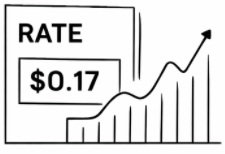 Pricing & Rate Terms
Rate
What it is: The price charged per unit (kWh, therm, gallon).
Why it exists: Utilities price usage in measurable units.
Control level: None
How it may appear on a bill:
“Energy Rate: $0.17 per kWh”
Helpful tip:
Always compare both usage and rate when reviewing a higher bill.
Tiered Rates
What it is: Pricing that increases after certain usage levels.
Why it exists: Encourages conservation.
Control level: Medium
How it may appear on a bill:
“Tier 1: 500 kWh @ $0.14
Tier 2: 550 kWh @ $0.19”
Helpful tip:
Crossing into higher tiers can cause sharp increases.
Seasonal Rates
What it is: Prices that change by time of year.
Why it exists: Demand varies by season.
Control level: None
How it may appear on a bill:
“Summer Rate Applied”
Helpful tip:
Seasonal rates often overlap with higher usage, compounding costs.
 Taxes & Government Charges
Utility Tax
What it is: A tax applied to utility services.
Why it exists: Required by state or local governments.
Control level: None
How it may appear on a bill:
“Utility Tax: $8.31”
Franchise Fee
What it is: A fee utilities pay to operate locally, passed to customers.
Why it exists: Covers use of public land and infrastructure.
Control level: None
How it may appear on a bill:
“Franchise Fee: $3.12”
 Related Guides
Sources
- U.S. Energy Information Administration (EIA)
https://www.eia.gov/energyexplained/ - U.S. Department of Energy (DOE)
https://www.energy.gov/energysaver
Last reviewed: January 2026